Construction Site Theft in the Capital: Deterrence That Actually Works
Construction site theft can remove valuable equipment, interrupt schedules and increase project costs overnight. Effective deterrence requires more than locked gates or warning signs. London contractors need layered protection that controls access, identifies suspicious activity and enables a prompt response. Here is how to build a security strategy that works.
Construction sites across London present tempting opportunities for thieves. Valuable machinery, portable tools, fuel, copper and building materials may remain unattended overnight, while temporary boundaries can create unexpected weaknesses. A single incident can halt work, increase insurance costs and place completion dates at risk. Effective protection therefore depends on prevention, visibility and rapid intervention rather than one isolated measure. Working with an experienced security agency in London can help contractors combine trained personnel, controlled access, mobile patrols and CCTV monitoring around the site’s changing risk profile. The result is stronger deterrence without unnecessarily disrupting workers, deliveries or daily construction activity.
Why Standard Precautions Often Fail
London building sites change almost daily as fencing moves, new contractors arrive, storage areas shift and previously secure access points become exposed. A security plan created during groundworks may no longer be suitable once expensive fixtures, cables and equipment arrive. Although padlocks and warning signs have value, they cannot assess suspicious behaviour or respond to an intrusion. Effective deterrence begins when potential offenders can see that access is controlled, activity is monitored and incidents will trigger action. Security reviews should therefore form part of regular site meetings, allowing managers to assess new access routes, damaged hoarding, lighting failures, delivery procedures and asset storage whenever the project moves into another phase.
Build Protection in Layers
No single measure can cover every vulnerability. Effective construction site security combines physical barriers, surveillance and professional human oversight.
A practical layered system may include:
- Secure hoarding with regularly inspected gates
- Manned guarding at important entry points
- CCTV coverage of compounds and vulnerable boundaries
- Mobile patrols during nights and weekends
- Controlled storage for tools, machinery and materials
- Clear incident reporting and escalation procedures
Each layer supports the others. Cameras help detect activity, while trained officers can investigate, control access and contact the appropriate services when necessary.
Control Everyone Entering and Leaving
Busy construction sites may receive workers, subcontractors, visitors and delivery drivers throughout the day. Without consistent checks, an unauthorised person can easily appear to belong there. Every individual should enter through an approved access point, provide identification and have their arrival and departure recorded. Suitable passes should be issued, while unexpected visitors must be confirmed with site management. Vehicle movements require the same attention. Staff should compare delivery details with expected schedules and verify unusual collections before allowing materials or equipment to leave. Maintaining accurate access and vehicle logs improves accountability and provides valuable information if tools, stock or machinery later go missing.
Combine Visible Guards with Active Monitoring
A visible security presence signals that the site is being watched. However, guards must have defined responsibilities rather than simply remaining near an entrance.
When choosing a security agency in London, ask how officers will conduct perimeter patrols, monitor storage zones, manage visitor records and report incidents. Duties should reflect the site layout, working hours and most valuable assets.
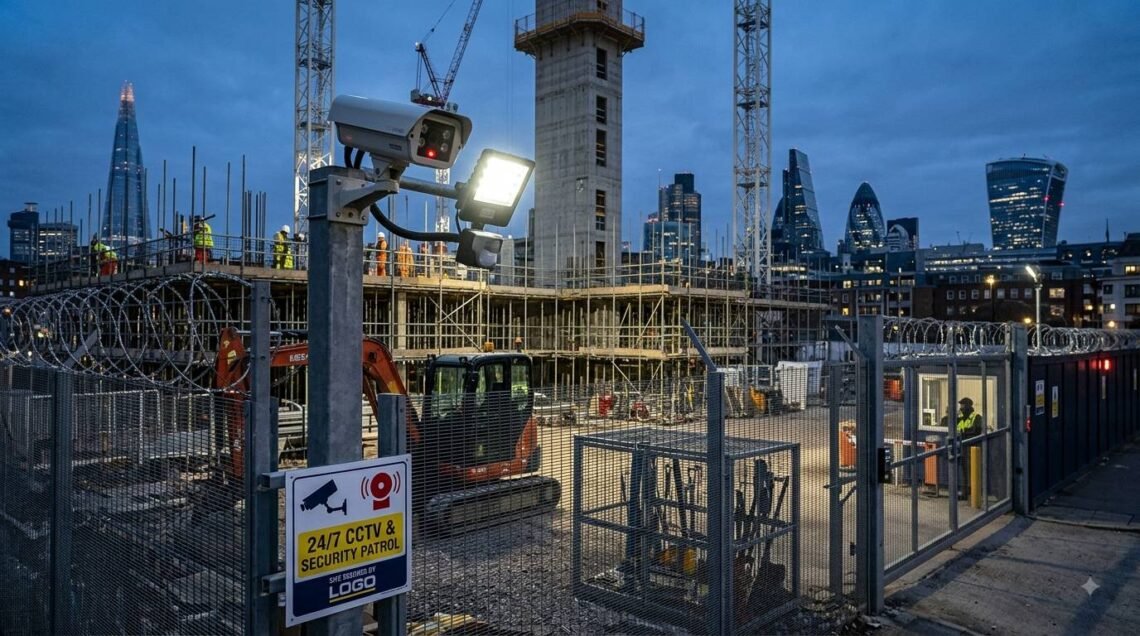
CCTV adds wider coverage, particularly across large compounds and quiet areas. Cameras should cover entrances, exits, storage areas and likely approach routes. Their position must be reassessed when scaffolding, temporary buildings or stored materials obstruct the view.
Protect Assets Before They Become Targets
Reducing opportunity is central to theft prevention. Portable tools should not remain scattered around the site, and high-value materials should not be stored beside weak boundaries.
Follow this numbered lock-up routine:
- Return portable equipment to controlled storage.
- Update the inventory and record machinery locations.
- Secure fuel, batteries, cables and valuable metals.
- Check gates, doors, fencing, lighting and cameras.
- Report missing keys, passes or equipment immediately.
Marking assets and maintaining serial-number records can also make stolen equipment harder to sell and easier to identify.
Prepare for Nights, Weekends and Shutdowns
Risk usually increases when activity falls. Before a weekend or planned closure, remove unnecessary portable valuables, check all perimeter sections and confirm who may require authorised access.
Mobile patrols can provide an unpredictable physical presence across quieter periods. For sites with substantial machinery or recurring intrusion attempts, continuous manned guarding may offer more appropriate protection. The arrangement should follow a current risk assessment rather than a standard package.
FAQs
1. What Is Usually Stolen from Construction Sites?
Portable tools, fuel, batteries, copper cable, building materials and machinery are common targets because they can carry significant resale value.
2. Is CCTV Enough to Prevent Site Theft?
CCTV can discourage and record suspicious activity, but it is stronger when combined with secure boundaries, active monitoring and a defined response procedure.
3. How Often Should a Site Security Plan Be Reviewed?
Review it whenever the layout, access points, workforce, project phase or value of stored materials changes. Regular weekly checks are also sensible.
4. What Should Security Officers Record?
Records should cover visitors, vehicles, patrols, unusual behaviour, access refusals, damaged boundaries, alarm activations and other security incidents.
5. Can Better Security Support Site Safety?
Yes. Restricting unauthorised access reduces the likelihood of trespassers entering hazardous areas or interfering with machinery, fencing and safety equipment.
Final Thought
Construction site theft is rarely prevented by one gate, camera or warning notice. Successful deterrence comes from making unauthorised entry difficult, detection likely and intervention prompt. Contractors should control access, secure valuable assets, inspect temporary boundaries and adjust protection as work progresses. Guards, CCTV monitoring and mobile patrols become more effective when they operate as parts of one coordinated plan.
Responsibility also extends beyond security personnel. Site managers, workers and subcontractors must follow consistent sign-in, storage and reporting procedures. Small lapses can create opportunities that offenders quickly recognise. Regular reviews are therefore essential, especially before weekends, shutdowns or the arrival of valuable materials. By selecting measures according to genuine risks and working with a capable security agency in London, contractors can protect equipment, limit costly disruption and keep construction programmes moving safely towards completion.


You May Also Like

How to Select the Right Awning for Your Garden in Any Season

Top Tips To Help You Finding Reliable Roofers In Hampshire